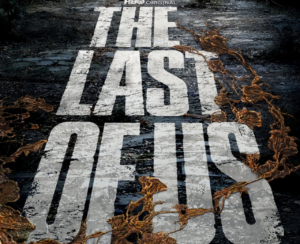
Ellie Williams: The Last Of Us – Power Of Truth Survivor

Ellie Williams from HBO’s The Last of Us is a character defined by her desperate need to know who she can trust in a world built on lies.

Born into a post-apocalyptic landscape where survival requires constant suspicion, Ellie is immune to the Cordyceps infection that has destroyed humanity. This makes her both precious and vulnerable: everyone wants something from her, but she can never be certain of their true motives.

Her defining fear—that everyone she cares about will either die or leave her—drives every relationship and ultimately shapes both her redemption and her destruction.

Ellie’s worldview is shaped by abandonment and betrayal at every turn. Her mother died at her birth, she was raised in a FEDRA orphanage, her best friend Riley left to join the Fireflies (then returned only to die), and every adult figure has either abandoned her or revealed hidden agendas.

Like all Power of Truth characters, Ellie believes “things are never what they seem” and “everyone has secrets.” In her world, this paranoia isn’t neurotic—it’s survival.

FEDRA claims to protect while actually oppressing. The Fireflies present themselves as humanity’s saviors while planning to kill her to synthesize and harness her immunity. Even love comes with lies, as she discovers when Joel—the person she finally learns to trust—betrays that trust with a devastating deception. He lies about what really happened at the hospital, where she was promised her immunity could provide a cure for the deadly Cordyceps infection.

Her relationship with Joel forms the emotional center of her Power of Truth journey. She constantly tests him: “You’re not going to leave me, right?”

The classic Power of Truth question—”Who can I trust?”—dominates their dynamic. She slowly, painfully learns to trust Joel completely, telling him, “Everyone I have cared for has either died or left me. Everyone—fucking except for you!”

This makes Joel’s lie about the Fireflies the ultimate Power of Truth nightmare: the person she trusted most took away her choice and lied to her face about it. When she asks him to “Swear to me that everything you said about the Fireflies is true,” and he says “I swear,” he doesn’t just betray her—he makes her doubt her own instincts.

For a Power of Truth character, being right about sensing deception but being gaslit into questioning yourself is the deepest wound possible.

In later episodes, Ellie falls completely into the Power of Truth Dark Side. After Joel’s murder, she becomes consumed by paranoia, trusts no one (not even her lover, Dina), and loses track of reality through PTSD flashbacks. She pursues revenge with such single-minded obsession that she destroys everything Joel died protecting—her future, her family, her peace.

Power of Truth characters in their darkest moments become “paranoid, delusional, basket cases”—and Ellie embodies all of this. She looks for evidence to confirm her rage, tests everyone’s loyalty until they break, and reads sinister meanings into everything. Her quest for certainty about who killed Joel and why becomes a death spiral that costs her Dina, her ability to play guitar (her last connection to Joel), and nearly her humanity.

Yet Ellie’s final choice—releasing Abby instead of drowning her—suggests she may be learning the hardest Power of Truth lesson: that “maybe is a very slim reed to hang your whole life on, but that’s the best we have.”

She acts on instinct (the Joel flashback) rather than paranoid calculation. She chooses mercy without certainty that it’s right. She accepts she’ll never know whether Joel’s choice was justified, whether the vaccine would have worked, or whether her life has the grand meaning she sought.

The Last of Us presents the Power of Truth character’s ultimate test: Can you survive when everyone really is lying, when the conspiracy is real, when trust inevitably leads to betrayal?

Ellie’s answer—traumatic, costly, but ultimately hopeful—is that you can choose connection over certainty, mercy over answers, and peace over the endless, destructive quest for absolute truth.


About the Nine Character Types®: The Power of Truth is one of the Nine Character Types explored in my book series. These characters are investigators, secret-keepers, spies, and skeptics, driven by the need to uncover what’s hidden—and haunted by the fear that, eventually, everyone will betray them (or they will betray themselves). ORDER eBOOK HERE

Change: Power vs Influence

“Strong men do not need power. The weak are destroyed by it.” This quote is from the film Nicholas and Alexandria, directed by Franklin J. Schaffner, from a screenplay by James Goldman and Edward Bond, based on Robert K. Massie’s book.

Only a handful of people possess real power. Howard Suber, my great mentor at the UCLA Film School, defined power as the ability to produce change or the ability to prevent change. 
Change through power is achieved through force of personality, personal will, or physical force. This power is derived from authority or control. It is status-driven. 
Contrary to power, which is often associated with high status, an alternative force is accessible to everyone, even those of low personal status. This force is the power of influence. Influence, which can be more significant than power based on position or control, is a democratic force that draws no attention to itself and keeps one out of the line of fire, making it a potent tool for effecting change.
 
Power can be yielded through authority, like that derived from heads of state, government officials, kings, teachers, and parents who hold enough control over others to enforce their dictates. On the other hand, a low-status artist or a writer might have enough influence to inspire a change of perspective and alter the course of another’s life.

Power compels people to change their course, but influence illuminates the reasons behind the change. Power is often associated with wealth, position, or status. However, the right words and actions can reshape history even by low-status individuals. A prime example is Gandhi, who lacked authority and high status, yet his influence was profound enough to alter the course of Indian history and expel the British from India.

Trust is the crucial distinction between power and influence. Power, often driven by fear, can coerce change. In contrast, influence is a visionary, persuasive, and voluntary force rooted in trust and integrity. It inspires people to respond positively and enthusiastically to the proposed changes, underscoring the ethical dimension of influence and its potential to inspire action. 

True leaders do not seek leadership as a position of authority but strive to earn influence. This influence is not bestowed or seized but gained through the trust and respect of those they inspire to embrace change. Trump has power. Obama had influence.

Make your character an agent of change. Show how they inspire trust and what they do to illuminate the need for change. Trust is gained by action more than by words. “Watch what people do, not what they say.”
 

The Power of Imagination

Todd Chavez


BoJack Horseman

Tod Chavez of BoJack Horseman, the Netflix animated series, is a great example of a Power of Imagination Character. Power of Imagination Characters are gentle, accommodating, and hate direct confrontation.


Naïve and Childlike


We meet Todd Chavez as an easygoing slacker who sleeps (and lives) on BoJack’s couch. While Todd may seem lost in everyday life because of his consistent and quite stunning lack of focus, his unfeigned optimism can be very inspiring: “As my blood type always says… B positive.”

Todd is a lazy dreamer and likes to go with the flow. Nevertheless, he comes up with crazy ideas almost daily. Although these ideas are rarely thought through from beginning to end, Todd believes in them with the conviction of a child. “I never know if I can handle anything”, he says at one point with genuine delight. “That’s what makes my life so exciting.”

Believing the Best

Todd’s naivety and innocence serve as a contrast to lead character BoJack’s self destructive behavior. Actions that often harm the people around him. In fact, Todd is one of the people that BoJack repeatedly hurts. At the start of the series, Todd wants to have a friendship with BoJack who he genuinely believes to “secretly have a good heart.”
He naturally sees the good in people and believes that they can improve.

Season 1 sees the first big crack in their relationship when BoJack sabotages Todd’s rock opera for selfish reasons. At first, Todd who naturally likes to restore peace resorts to passive-aggressive behavior instead of confronting BoJack. Later in the series, Todd learns his lesson and stands up for himself, resulting in cutting BoJack out of his life. He finally realizes how much of a toxic influence BoJack is on him. When Todd learns that BoJack slept with the girl he likes in season 3, he finally confronts him: “You can’t keep doing shitty things and then feel bad about yourself like that makes it okay. You need to be better.

Finding Himself

In later seasons, Todd’s and BoJack’s relationship is restored to some extent although it never gets back to how it was. Todd learns to follow his own path instead of going along with everyone else’s. In season 4’s “Hooray! Todd Episode!”, Todd spends a whole episode trying to fix the problems of his friends who simply expect him to have nothing else to do.
While he masterfully performs multiple tasks at once in his own chaotic but highly creative way, nobody even recognizes his efforts.

In a way, this is his curse: While Todd stumbles through life with the unwavering need to keep the people around him happy, he himself is constantly being overlooked and undervalued by these very people. Fittingly, he says in this episode: “I do love getting my picture taken. It’s proof I exist.” Todd becomes increasingly aware of this, stating only a few episodes later: “It’s always nice to be included in a sentence someone says.”

At the end of “Hooray! Todd Episode!”, however, it’s BoJack who surprisingly acknowledges how much Todd does for everybody. After BoJack tells Todd how much he appreciates him, Todd finally finds the courage to do what’s best for himself instead of doing what’s best for others. Having recently realized that he is asexual, he takes the first step to embracing it and goes to an asexual meet-up. Todd comes to terms with his childhood, reconnects with his family and even finds love.

In the last season, his stepdad Jorge tells Todd that he had always been mean to him because the world is mean. Todd replies: “Not my world.” While asserting himself, Todd chooses to hold on to his optimism and never loses his intuitive ability to anticipate what his friends need. In the last episode, Todd drags BoJack out of a party to watch fireworks with him on the beach. But while Todd uses his childlike exterior to convince BoJack to come with him, he doesn’t do it for himself. “So, why did we need to be on the beach?”, BoJack asks. “Oh”, Todd replies. “You just seemed really overwhelmed at the party.”

No Talking Please

It’s not possible for a creative person to continually draw from the well of inspiration without occasionally stopping to refill the source. This summer, take some time to fill your well.

Summer Assignment

What inspires you? Is it music? Dance? Painting? Swimming? Walking? Climbing? Canoeing? Gardening? It is a firm summer assignment (or any time assignment) to take some time to enjoy what you love.

Be really selfish and do whatever it takes to make your heart soar. Do this alone. Give yourself the freedom to completely indulge in one of your interests without any distractions, interruptions, or demands from anyone else.

Buy a single ticket to a concert or other non-verbal performance. Spend a few hours wandering around a museum alone. See a new exhibit or part of the permanent collection that you’ve never seen before. Take some time to enjoy nature or revel in the Great Outdoors. Wander around a public park or flower garden on your own.

No Words Please

See and do exactly what you want for one hour, all on your own. Whatever you do, don’t go to a movie or a play. The object of this exercise is to get away from actors and dialogue and to find rest, renewal, and refreshment elsewhere. Find an activity that doesn’t involve words.

Experiment with something new. If you’ve never seen a professional dance performance, buy a ticket and see what one is like. Seek out an odd or unusual museum. Explore a neglected area of the countryside or an unexplored corner of your city.

Ride a bus and watch the world go by. People watch. Give your unconscious mind time to reflect and create by doing or thinking about something else. If nothing else, take a long hot bath filled with scented bubbles. Turn the lights down low and play some soft, soothing music. Relax, enjoy and be a bit dreamy.

Adaptation Competition

I’ve been working with Enter the Pitch, which runs a short film competition with a £25,000 prize to make a short film. The subject must be inspired by a character or story in the Bible. Choose from an amazing range of powerful, dynamic, complex, troubled characters in stories that have persisted for thousands of years.

Continue reading

Lessons from eQunioxe Scriptwriting Workshop

The answer to this these questions provides a critical overview of the story. If they aren’t answered clearly then it doesn’t matter how good the individual scenes might be. The story won’t add up to much or hold together properly.

Continue reading

Summer Workshop in Italy

Friend and colleague from UCLA, Paul Chitlik, now a clinical assistant professor at Loyola Marymount University’s School of Film and Television, holds a residential writing seminar in Europe every summer. This year, the seminar is in Cairo Montenotte, Italy.

Continue reading

Plot vs. Character

I believe that if you want your stories to endure, then plot must come from character and not the other way around. I have often said that storytellers are the most powerful people on earth– because they have the power to move the human heart. There is no greater power on earth. You cannot move hearts by relying on plot mechanics.

Continue reading

Triage – Day Thirty Seven – #40movies40days

Injured and traumatized war photographer, Mark (Colin Farrell), returns home from a photo assignment in Kurdistan. He returns alone. He professes to have been separated from his best friend Colin. Unravelling the mystery of what happened is key to his recovery.

Continue reading

Foreign Correspondent – Day Thirty – #40movies40days

Foreign Correspondent, directed by Alfred Hitchcock, is a great complement to The Quiet American. Again, two men fighting for different sides are caught in a triangle over a girl.

Continue reading

Rabbit Proof Fence – Day Fifteen – #40movies40days

The Rabbit Proof Fence is a powerful story of survival, hope and the triumph of the human spirit. Three young girls walk 1,500 miles to return to their mother and aboriginal homelands.

Continue reading

The Wages of Fear – Day Eleven – #40movies40days

The Wages of Fear (the French title is: Le Salaire de la Peur) is a directed by Henri-Georges Clouzot and stars a young Yves Montand. It’s a classic French thriller as fresh and contemporary today as it was the day it was made (almost 60 years ago).

Continue reading

Baby Face – Day Six – #40movies40days

The film is notorious for its unrelenting and unsavory look at women’s lack of power in society and commerce (except for sexual power). Baby Face was the film that finally compelled the movie studios to enforce the Hays Office production code that would, for decades, censor American movie morality.

Continue reading

The Adjustment Bureau – Day Four – #40movies40 days

Much has been written about who the Adjustment Bureau is– are they angels and is the “chairman” God? Let’s look at what the bureau does– it creates a hunger in people that can be directed to fulfill the bureau’s plan.

Continue reading

The Woman in the Window – Day Three – #40movies40days

We lose our integrity bit by bit, decision by decision, one small choice at a time. Thoughts (or fears) create action. Action creates habits. Habits build (or destroy) Character. Character creates Destiny.

Continue reading

Dogtooth – Day Two – #40movies40days

Last night I saw Dogtooth, the 2011 Academy Award nominated Best Foreign Language Film from Greece. There’s going to be no rhyme or reason in selecting the films for my 40 movies in 40 days project. I’ve decided to go wherever the spirit leads me.

Continue reading

Rango and My Own Lenten Observance – #40movies40days

I’ve decided to watch 40 films in 40 days and write about them from a personal standpoint as I puzzle through how I want to be reborn on Easter morning. It will be a journey of looking at my life through the lens of movies– some contemporary and some old school– I hope you will join me.

Continue reading

NFL Leadership Styles – Can You Help?

Sometimes it is really useful to look at the Character Types of real people to see how what they do or say defines them. The SuperBowl and the magnificent victory by Green Bay and their young quarterback Aaron Rodgers is a great example to start off with. I’d like to type all the major players in the NFL in terms of their leadership styles. I’m looking for some help here– with quotations or a link to a video as an illustrations. Can you help fill things out?

Continue reading

My Day at Pixar

I spent an amazing day at Pixar on Tuesday. I was doing a Character Map session with some of their writers, artists, directors and others. It’s easy to spot people coming to Pixar for the first time. They’re the ones, like me, walking around trying to soak in all the wonderful visuals in the building and snapping pictures like mad. Here are some of mine–

Continue reading

McKee on 2011 Best Screenplay

Here is Robert McKee’s views on Best Screenplay and on stories based on history, fact or actual people’s lives. Like McKee, I believe that a writer’s first duty is to the emotional truth of the story, not factual accuracy. That’s why it’s FICTION.

Continue reading

Mark Zuckerberg on SNL

The lesson here is FaceBook and Zuckerberg’s deft handing of The Social Network movie. Despite being a fictional and immensely unflattering protrait, Zuckerberg wisely refrained from going ballistic in the press– which wouldn’t have helped and would have only made him look worse. Now he is at the point of being able to laugh at the whole thing and wins points for not taking himself too seriously.

Continue reading

Day Two at eQuinoxe

When a script isn’t working well, isn’t as compelling a read as it should be or has some kind of emotional disconnect in the story the problem is usually the lack of a clear compelling and well-developed Want, Need or Price.

Continue reading

Tony Curtis – Power of Ambition

Tony Curtis passed away at the end of September 2010.  Here is what Time Magazine has to say about one of the roles that defined him as an actor, Sidney Falco in The Sweet Smell of Success.  It is a stunning example of a Power of Ambition protagonist falling to the Dark Side.

(In the film) Sidney Falco, Broadway publicist, is telling his secretary Sam how far he wants his ambitions to take him: “Way up high, Sam, where it’s always balmy. Where no one snaps his fingers and says, ‘Hey, Shrimp, rack the balls!’ Or, ‘Hey, mouse, mouse, go out and buy me a pack of butts.’ I don’t want tips from the kitty. I’m in the big game with the big players. My experience I can give you in a nutshell, and I didn’t dream it in a dream, either. Dog Eat Dog. In brief, from now on, the best of everything is good enough for me.”

An actor doesn’t often get a role that upends his Hollywood image and reveals his inner demons. Tony Curtis, who died Wednesday at 85 of cardiac arrest at his home near Las Vegas, found that dream-nightmare part in the 1957 Sweet Smell of Success. Sidney Falco, a name that replaced Sammy Glick as the slick nogoodnik par excellence, is a pretty boy on the make — all hustle, no morals, and with a line of patter like petty larceny…

…Another refugee from the New York streets, and one of the first postwar actors to produce his own movies, (Burt) Lancaster … cast him in Sweet Smell as Sidney, the publicist trying to get his clients’ items in the gossip column written by Lancaster’s J.J. Hunsecker.

In the script, by Ernest Lehman and Clifford Odets, Sidney’s status floats between villain and victim — he peddles flesh and secrets, and pins the Commie label on an innocent young musician, before getting climactically framed by J.J. — but (actor) Curtis was the victor in the movie. It’s easy to imagine that, that when the actor first read this script, he thought exultantly, “That’s me all over!” A shark in the Broadway aquarium, Sidney looked like a million bucks, all counterfeit.  FULL ARTICLE HERE

A character driven by the Power of Ambition can be a hardworking, eager, charming optimist with a “can-do” spirit— or a lying, manipulative, backstabbing striver who will do anything to get ahead in life.

The definition and meaning of “success” is at the heart of a Power of Ambition character’s story.  The basic question for this character’s emotional journey is: “What does it profit a person to win the whole world but lose his or her own soul?”

That what we watch Sidney Falco do, lose his soul, over the course of The Sweet Smell of Success.  It is a film well worth watching and a master course in the Power of Ambition Character Type.

The Value of Incremental Change

Writing just one hour day can produce a new script in just 22 weeks, using The One Hour Screenwriter eCourse. That means you could complete two new scripts a year with weekends off and eight weeks of vacation time or time for rewrites. And that’s while holding a full-time job, meeting social and family obligations and all the other duties in a busy life.

Continue reading

Jumping Off a Cliff

I am always talking about characters taking a Leap of Faith in a story. But I have been a bit hesitant about making my own. The cliff I am contemplating right is moving to Europe to live and work for a year, possibly longer.

Continue reading

How to Use Byron Katie’s Four Questions

MADRID

Yesterday I posted Byron Katie’s four questions.  These questions get at the fear and fearful thinking that causes personal suffering.  As many of you know the best definition of fear I have ever heard is:  “Fear is the anticipation of grief.”  Anticipating something often makes it true– That’s where the saying “a self-fulfilling prophecy” comes from. Here is how to use the questions in fictional character development:

1.  Is it true? Every character has a specific view of the world, of themselves and of their role in the role.  This is based on the person’s Character Type.  These beliefs and or philosophies limit the character in some profound way.  For example, a Power of Truth character believes that the world is fundamentally uncertain.  These characters believe life is filled with hidden pitfalls, secret agendas and you can’t really trust in or believe anything.

When operating out of fear these character doubt everyone and everything.  They don’t even trust themselves– second-guessing every decision, doubting themselves and others.  Mickey Sachs (Woody Allen)  in Hannah and Her Sisters at his most anxious neurotic state is a great comic example of the Power of Truth Character Type.  Mickey says:

“…I really hit bottom.  You know, I just felt that in a Godless universe, I didn’t want to go on living.  Now I happen to own this rifle which I loaded, believe it or not, and pressed to my forehead.”
“And I remember thinking… I’m gonna kill myself.  Then I thought… What if I’m wrong? What if there is a God?  I mean after all, nobody really knows. But then I thought, no.  You know,  maybe is not good enough.  I want  certainty or nothing.”

“…I really hit bottom.  You know, I just felt that in a Godless universe, I didn’t want to go on living.  Now I happen to own this rifle which I loaded, believe it or not, and pressed to my forehead.”

“And I remember thinking… I’m gonna kill myself.  Then I thought… What if I’m wrong? What if there is a God?  I mean after all, nobody really knows. But then I thought, no.  You know,  maybe is not good enough.  I want  certainty or nothing.”

Mickey nearly shoots himself but the gun slides off his forehead and he escapes in the resulting mayhem.  He  run into the street, walks for hours and then retreats into a movie theater where a Marx Brother’s movie is playing.

2: Can you absolutely know it’s true? In a climatic moment, Mickey realizes he can’t be absolutely certain there is no God.  He says:
“…I went upstairs to the balcony, and I sat down and, you know, the movie was a film that I’d seen many times in my life since I was a kid, and I always loved it.  And, you know, I’m watching these people up on the screen, and I started getting hooked on the film, you know?”
.
“…And I started to think how can you even think of killing yourself? I mean, isn’t it so stupid?  Look at all the people up there on the screen.  You know, they’re real funny, and, and what if the worst is true?”
.
“…What if there’s no God, and you only go around once and that’s it?  Well, you know, don’t you want to be part of the experience?  You know, what the hell, it’s not all a drag.”
3: How do you react—what happens—when you believe that thought? When Mickey believes there is no real certainty he fells anxious, depressed and self-destructive.  When he doubts everything he wants to kill himself.
.
4: Who would you be without the thought? Without obsessing about certainty or the lack of it, Mickey can begin to enjoy his life, relax and be more open, fun-loving and tolerant of ambiguity.  He says:
I’m thinking to myself, geez, I should stop ruining my life… searching for answers I’m never gonna get, and just enjoy it while it lasts.  And… I mean, you know, maybe there is something. Nobody really knows.  I know, I know maybe is a very slim reed to hang your whole life on, but that’s the best we have. And… then, I started to sit back, and I actually began to enjoy myself.”
Absolutely nothing changed but Mickey’s attitude.   When he let go of his obsessive thoughts, based on his fears and narrow world view, he became more comfortable with uncertainty and more available to life and it’s enjoyments.
.
Byron Katie’s process is another way of looking at the Leap of Faith described in the Character Map eBook.  Every character must, at some point, let go of their self-limiting view of the world and of themselves.  This is the only way to make the transformation that is so scary but so emotionally satisfying.

Idealism Wins at the Oscars

Pixar won the 2009 Oscar for Best Animated Feature with Up. All seven Pixar films released since the creation of the category have been nominated. Five have taken home the Oscar: Finding Nemo, The Incredibles, Ratatouille, WALL-E, and Up. Three of those five Oscar winners— Up, The Incredibles and Ratatouille— are Power of Idealism films.

Continue reading

Is “Good Writing” A Matter Of Culture?

William Zinsser discusses how “good writing” is a matter of cultural difference. Here’s what he said in a talk to the incoming international students at the Columbia Graduate School of Journalism on August 11, 2009:

Continue reading

Trapped as an Enduring Film Theme

Dr. Howard Suber, author of The Power of Film, says that the majority of all great films could be titled “Trapped.” Here he talks on a panel at the United States Holocaust Memorial Museum about the enduring interest in Holocaust films, illustrating that theme

Continue reading

Battle Speeches – Power of Idealism

It is critical that a battle speech reveal character. Each kind of leader sees the world differently and fights for different reasons. Each kind of leader inspires followers differently.

Continue reading

Laughing Until It Hurts

“Comedy is never the gaiety of things, it is the groan made gay,” wrote drama critic Walter Kerr. This is the great irony implicit in comedy. It feels good to walk out of a theater laughing. But we often go into the theater not feeling so good. Many times, what makes us laugh is seeing that other people are not feeling so good either.

Continue reading

Top Ten Political Movies

In 2008, Entertainment Weekly set out to identify some of the best-loved political films of all time. Here are the top 10 picks, with each film’s primary star.

Continue reading

Writing Routine

I discovered a great website that discusses how various writers and artists approach their work and organize their day. Below is a discussion of the simple method Anthony Trollope used to write forty-nine novels in thirty-five years!

Continue reading

Mad Men – Art vs Commerce

Mad Men has had wide-spread critical acclaim, won numerous awards and has become a cultural reference– but it has a very small audience. This struggle between art vs commerce and high brow vs low prestige mass entertainment is a dilemma writers and producers wrestle with continually.

Continue reading

Creating a New Character – Fear

It’s important to look at the ways the character is most worried about failing others and becoming unloved or unlovable. This often is traceable back to the character’s own childhood fears. These early fears powerfully stay with us and color our adult lives.

Continue reading

Fear in Politics, Life, and Storytelling

In my Character Map workshops I talk a lot about fear. This article from the Huffington Post makes a clear statements about fear in politics, everyday life and storytelling. It is a wonderful summary of the discussion of fear I have with my workshop participants.

Continue reading

Barack Obama – Three Factors of Character Type

I’ve written extensively on the differences in Character Type between John McCain and Barack Obama. Both candidates’ response to the recent American financial crisis is further revealing of all aspects of their Character Types.

Continue reading

McCain and Obama: Character Consistency in Storytelling

#ThinkpieceThursday – The Presidential election is an opportunity to see two Character Types play their roles on the world stage.

Continue reading

John McCain – Three Factors of Character Type

The same tactics and approach can create totally dissimilar strengths and weaknesses, problems and opportunities because the two characters view the world so differently.

Continue reading

New Book With A Powerful Backstory

“I pressed the button on the phone and the first sound I heard in the headset was a child sobbing. She was barely able to speak, kept saying the same thing over and over…”I just want it to stop.” It was Monday morning 7.30 am. My very first call as a ChildLine volunteer counselor.

Continue reading

Wall-E – Getting to the Essence of Things

In a few seconds the audience (or executive in a pitch session) should be able to get the essential core of your story and character. One of my favorite quotes is by Albert Einstein: “If you can’t say it simply and briefly you probably don’t understand it well enough.”

Continue reading

Third Cocktail Question

Finishing up with the third cocktail question: “Would you like to hear a great idea for a movie?”  For some reason, when people know you are a screenwriter they feel compelled to tell you their story or ask your opinion on their idea.

As you are listening, realize you are sitting in the place of a beleaguered studio executive.  What can you learn from this experience?

Always listen to the idea carefully because it’s a great opportunity to learn two of the most valuable lessons about pitching.  Pretend you listen to screenplay ideas for a living.

First, notice the person isn’t nervous.  They are simply sharing something that they are interested in and feel  passionate about.  They are hoping you will like the idea but the fun is in just communicating the it.  That is the greatest lesson of pitching.  Don’t go into a pitch meeting with the expectation or desire to sell the pitch.  Just enjoy sharing your story.  That goes a long way in eliminating nervousness.  Have fun.  Make it fascinating cocktail conversation.

Second, keep it short and punchy.  You want a strong opening, a series of interesting complications and a satisfying payoff.  That’s it.  Any more than ten to fifteen minutes is overkill.  Einstein once said”  “If you can’t explain it briefly and simply, you don’t understand it well enough.”  And he was talking about physics!  The best thing you can get anyone to say in a meeting is: “Tell me more.”  Then you have permission and the interest and attention to elaborate.  You don’t want someone looking at the watch and thinking:  “Get to the point already.”

Isn’t that what anyone wants in a cocktail conversation:  A fun story that is mercifully short.  Get in. Get out.  Leave them wanting more.