Character Type NOT Archetype – Wizards in Harry Potter

#TypesTuesday – There is no one way to be a wizard.
Continue reading
#TypesTuesday – There is no one way to be a wizard.
Continue reading

Did your New Year’s resolutions include finishing that passion project? Any writing project is daunting. Going from the first blank page to 100 screenplay pages or 300 novel pages is a huge challenge. But the answer to “How do you eat an elephant?” is, one bite at a time. The way to accomplish any goal is incremental progress. Get started and keep going.
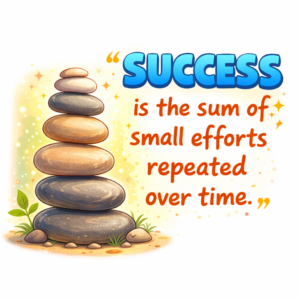
Robert Collier, one of the first self-help authors, said: “Success is the sum of small efforts, repeated day in and day out.”
Be consistent. Be diligent
Get started. Keep going
When I was a student in the UCLA Master’s in Screenwriting program (oh so many years ago) we had 10 weeks to go from blank page to finished first draft. The way I could meet that deadline time after time was to write 5 pages a day. Just 5 pages. Everyday. I never had to pull all-nighters or hand in an unfinished draft. I was a full-time student then. Five pages may be too much for someone working full time.
So here is a workable alternative:
But everyone, no matter how busy, can block out one hour a day.
The course is a step-by-step guide. You have a specific assignment each day. There is screenwriting information, video lessons, and all the material you need each day.
To learn more about The One Hour Screenwriter eCourse click HERE

 It’s not possible for a creative person to continually draw from the well of inspiration without occasionally stopping to refill the source. This summer, take some time to fill your well.
What inspires you? Is it music? Dance? Painting? Swimming? Walking? Climbing? Canoeing? Gardening? It is a firm summer assignment (or any time assignment) to take some time to enjoy what you love.
Be really selfish and do whatever it takes to make your heart soar. Do this alone. Give yourself the freedom to completely indulge in one of your interests without any distractions, interruptions, or demands from anyone else.
Buy a single ticket to a concert or other non-verbal performance. Spend a few hours wandering around a museum alone. See a new exhibit or part of the permanent collection that you’ve never seen before. Take some time to enjoy nature or revel in the Great Outdoors. Wander around a public park or flower garden on your own.
 No Words Please
See and do exactly what you want for one hour, all on your own. Whatever you do, don’t go to a movie or a play. The object of this exercise is to get away from actors and dialogue and to find rest, renewal, and refreshment elsewhere. Find an activity that doesn’t involve words.
Experiment with something new. If you’ve never seen a professional dance performance, buy a ticket and see what one is like. Seek out an odd or unusual museum. Explore a neglected area of the countryside or an unexplored corner of your city.
Ride a bus and watch the world go by. People watch. Give your unconscious mind time to reflect and create by doing or thinking about something else. If nothing else, take a long hot bath filled with scented bubbles. Turn the lights down low and play some soft, soothing music. Relax, enjoy and be a bit dreamy.

All Stories Are Doorways
Continue reading
Dealing with Difficult Notes
Continue reading
How to Evaluate Stories is a great little guide to finding story problems and fixing them fast!
Continue reading
When consensus is weakness
Continue reading
Start with just One Hour a Day
Continue reading
Pixar has lost its way.
Here’s why.

Nebuchadnezzar Biblical Power of Will – When is Strength Weakness?
Continue reading
All Stories Are About Loss and Grief
Continue reading
The Biblical Story of Ruth explores the tension between faithfulness and independence
Continue reading
Saint Nick portrayed as all nine Character Types
Continue reading
Happy Christmas, English Style!
Continue reading
Extraordinary vs the Ordinary – Yesterday
Continue reading
Greek Myth, Faust and Frankenstein: The Tragedy of Idealism
Continue reading
Fate vs Destiny: Slumdog Millionaire, Lawrence of Arabia, & Ratatouille
Continue reading
Joe is a toxic Power of Love character in the Netflix series You
Continue reading
Iron Fist in a Velvet Glove Wielded for Her Children
Continue reading
A dark romantic comedy featuring two Power of Love protagonists.
Continue reading
Giving and Getting Notes Effectively
Continue readingNew eBook – Take your project to the next level
Continue reading
#WritingAdviceWednesday – A testimony of The Character Map in action
Continue reading
Audiences Reward Movie Franchises When They Take Time and Care
Continue reading
#WritingAdviceWednesday – View the finalists for The Pitch South Africa
Continue reading
#WritingAdviceWednesday – Treat a Monster the same as any Human Character
Continue reading
#WritingAdviceWednesday – Fear is a Writer’s friend
Continue reading
#WritingAdviceWednesday – Kiss and Tell
Continue reading
#WritingAdviceWednesday – Taking A Risk
Continue reading
#WritingAdviceWednesday – On The Move
Continue reading
#WritingAdviceWednesday – It Takes Two To Tango
Continue reading
#WritingAdviceWednesday – Learning to offer effective criticism is just as important as receiving it
Continue reading
#MondayMusings – The value of incremental progress
Continue reading
#BeFabFriday – Keep on keeping on!
Continue reading
#WritingAdviceWednesday – Precious things in stories
Continue reading
#WritingAdviceWednesday – Refill the Well
Continue reading
#BeFabFriday – Sticking to schedule is vital to success
Continue reading
#BeFabFriday – Be bold. Be brave. Be you.
Continue reading
#WritingAdviceWednesday – Why all film adaptations should look like fish
Continue reading
Isolation is part of the DNA of great movies
Continue reading
Write a compelling screenplay or novel with simple storytelling game
Continue reading
Any major loss a character experiences yields rich story opportunities.
Continue reading
“Why” cops do what they are do and “Why” they are affected by the job
Continue reading
#ThinkpieceThursday – Writers are advised to write what you know. What we know the most about is change.
Continue reading
#MondayMusings – What the main character wants is a clear and simple ego-driven goal.
Continue reading
Stalin and Putin: Power of Will.
Continue reading
#WritingAdviceWednesday – Comedy And Screenwriting Tips.
Continue reading
The most entertaining stories incorporate elements that are both interesting AND have some kind of deeper meaning. All great movies have both.
Continue reading
Rudolph tells us all we need to know about heroes.
Continue reading
Why Billy Elliot and Bend It Like Beckham were such a hit with International audiences.
Continue reading
#MondayMusings – Too often we are so focused on where we are going, we forget how far we’ve come.
Continue reading
I strongly recommend that you take a break from all factual and fictional media stories to get over a block in your story.
Continue reading
I’ve been working with Enter the Pitch, which runs a short film competition with a £25,000 prize to make a short film. The subject must be inspired by a character or story in the Bible. Choose from an amazing range of powerful, dynamic, complex, troubled characters in stories that have persisted for thousands of years.
Continue reading
Writing is writing regardless of what kind of writing it is. Here are three key tips for success.
Continue reading
Whether you liked the film or not, Noah is a great look at the adaptation process and the key elements in transforming a story from one medium to another.
Continue reading
#WritingAdviceWednesday – It’s what’s not on the page that’s important.
Continue reading
Power of Will characters take what they want, fight for every inch of turf, refuse to show any weakness themselves and pounce decisively on the weakness of others.
Continue reading
The higher the stakes for the character the more the audience cares about what happens next.
Continue reading
The answer to this these questions provides a critical overview of the story. If they aren’t answered clearly then it doesn’t matter how good the individual scenes might be. The story won’t add up to much or hold together properly.
Continue reading
#WritingAdviceWednesday – Great short tip on the key to a wonderful scene.
Continue reading
There are a number of ways to approach being in the medical profession in a drama.
Continue reading
“How” a crime is solved is so much less important than “Why” the cops are doing what they are doing and “Why” they are affected by the job. If there is no “Why” it’s just cops going through the motions.
Continue reading
I will be in Stockholm from April 29 to May 5. I will be meeting one-on-one with writers, producers, and productions executives but there are three workshops open to the public.
Continue reading
What does the Gangnam Style song and dance video have to do with writing? Ralph Waldo Emerson said it best–
Continue reading
John Steinbeck, a Pulitzer Prize winning author (Grapes of Wrath) and Nobel laureate offers six basic tips on writing.
Continue reading
Here are three key take-aways from a workshop in Norway about common issues that make a film project less effective and less emotionally compelling.
Continue reading
Story rules from a master.
Continue reading
April 2012 Master Class in Bergen Norway
Continue reading
#ThinkpieceThursday – A character’s Immediate Response is where the character goes first emotionally.
Continue reading
It turns out that just putting in hours and hours at your chosen writing work is not enough; the only way to get better is to make sure you’re devoting those hours to what the researchers call “deliberate practice.”
Continue reading
I saw this speech by Brene Brown about vulnerability and fear on a Ted Talk. Everything she says applies to writing and is part of the Character Map eBook.
Continue reading
Do you have a sense of humor about yourself? Doing serious work demands not taking your success, your failures or yourself too seriously. Not doing so is a serious mistake.
Continue reading
#WritingAdviceWednesday – Always make your work personal, and you never have to lie
Continue reading
Advice for any writer who is creating an unfamiliar world– in another historical period or in a fantasy world or science fiction realm.
Continue reading
Jerry Seinfeld shares the secret to great writing– comedic or otherwise.
Continue reading
Here’s a great “Back to Basics” summary of what you need to do in a pitch, in an outline and in the finished script.
Continue reading
#WritingAdviceWednesday – Here is some sage advice from the Coen Brothers.
Continue reading
#WritingAdviceWednesday – How “conventional wisdom” is often wrong in screenwriting.
Continue reading
Here is the good news and the bad news about being a writer– “It never gets any easier.” Every writer from an Academy Award winner to a complete beginner face the same challenges, obstacles and terrors
Continue reading
Writing just one hour day can produce a new script in just 22 weeks, using The One Hour Screenwriter eCourse. That means you could complete two new scripts a year with weekends off and eight weeks of vacation time or time for rewrites. And that’s while holding a full-time job, meeting social and family obligations and all the other duties in a busy life.
Continue reading
Pixar won the 2009 Oscar for Best Animated Feature with Up. All seven Pixar films released since the creation of the category have been nominated. Five have taken home the Oscar: Finding Nemo, The Incredibles, Ratatouille, WALL-E, and Up. Three of those five Oscar winners— Up, The Incredibles and Ratatouille— are Power of Idealism films.
Continue reading
I stumbled on a great letter David Mamet wrote to the writers of The Unit. It’s really useful advice for any writer of any script in any genre.
Continue reading
Here’s an interesting article from Peter Hanson, author of Tales from the Script (a collection of interviews of famous screenwriters).
Continue reading
A UCLA Screenwriting Professor colleague sent me this description of his workshop in Spain. Interesting possibilities to rework your script.
Continue reading
Great free service to research that next script or arcane topic of interest.
Continue reading
William Zinsser discusses how “good writing” is a matter of cultural difference. Here’s what he said in a talk to the incoming international students at the Columbia Graduate School of Journalism on August 11, 2009:
Continue reading
#MondayMusings – Willpower, like a bicep, can only exert itself so long before it gives out.
Continue reading
#MondayMusings – The Library of Congress released a treasure trove of content
Continue reading
Read this if you are kind, strong willed, but can be self-critical.
Continue readingManaging our time needs to become a ritual too. Not simply a list or a vague sense of our priorities. That’s not consistent or deliberate. It needs to be an ongoing process we follow no matter what to keep us focused on our priorities throughout the day.
Continue reading
If you understand each of the characters in your script on a deep emotional level the world and plot will take care of itself. Here’s how.
Continue reading
Here’s how to spot old attitudes, emotions, behavior patters and actions that sabotage you and a great exercise to clear you mind for successful writing.
Continue reading
There are interesting reasons for the global dominance of American movies. Here a couple of observations from Europe via movieScope Magazine.
Continue readingA good writer thoroughly understands his or her characters’ emotions, inner conflicts and the whole process of internal transformation. Great writers dig deep to find this emotional truth within themselves.
Continue reading
#BeFabFriday – Life has no meaning without the narrative we construct around it.
Continue reading
Everyone who has heard me speak or teach knows how fundamental vulnerability is to making a movie or television show memorable. The way an audience BONDS with a character is through scenes where the character is vulnerable. Here are some of my favorites– what are yours?
Continue reading
“Comedy is never the gaiety of things, it is the groan made gay,” wrote drama critic Walter Kerr. This is the great irony implicit in comedy. It feels good to walk out of a theater laughing. But we often go into the theater not feeling so good. Many times, what makes us laugh is seeing that other people are not feeling so good either.
Continue reading
Here’s how to put Martin Scorcese’s philosophy into practice every day. Below is a FREE LESSON from the One Hour Screenwriter eBook.
Continue reading
#TypesTuesday – Here is a list of character examples.
Continue reading
The internal conflict central to “Know Thyself” is key to making any script work. Over the course of a really satisfying film or television show a character makes that risky and dangerous “voyage within.”
Continue reading
“We don’t see things as they are, we see them as we are.” Anais Nin. That is an incredibly important concept in creating authentic characters.
Continue reading
“Fear is static that prevents me from hearing myself.” Samuel Butler (English novelist, essayist and critic). Truer words were never spoken. A character’s fear is the greatest burden he or she carries. It is the constant “static” the character cannot escape.
Continue reading
The endings of The Taking of Pelham 123 and Duplicity left me shrugging and saying “Huh?” Both were box office duds. The lesson from both films is “earn your ending.”
Continue readingDifferent Character Types view philosophical concepts like fairness, love and social or personal responsibility very differently. They each have very distinct ideas about how the world works and very specific ideas about what is owed to the self and to others.
Continue readingThe lesson here is make the world real. Keep your character credible or they won’t connect emotionally. Treat everyone in the film as a real live three-dimensional human being.
Continue reading
An interviewer asked Updike, about his writing routine: You’ve said that it was fairly easy to write the Rabbit books. Do you write methodically? Do you have a schedule that you stick to? Updike answers with a full explanation of his routine
Continue readingWhen looking for a novel to adapt, look for a story that has a strong external narrative. Find a story in which a character’s actions lead to specific external consequences with real impact and which effect important transformation in the character or others.
Continue reading
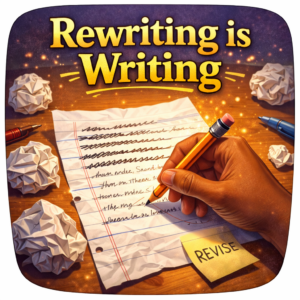 In further discussion of yesterday’s post– How do you tackle a daunting rewrite? My best suggestion is to outline your current script draft. Write what actually happens in each scene. What are characters doing? Briefly summarize what people say. Don’t get lost in tweaking dialogue on a major rewrite. Instead, look at the big-picture. In order to do that– An outline is critical.
Once you’ve outlined your current draft, go over the outline scene-by-scene. Ask yourself a few key questions– Is your story urgent and active enough? Does your story have enough adrenalin moments?
Ed Hooks, in his terrific book, Acting for Animators, defines adrenalin moments as story events your character will remember on his or her deathbed. They are the highest highs and the lowest lows. Make a list of your character’s adrenaline moments in your story. You should have at least eight. They are:
* The event that starts the story off
* The event that propels your character forward into the story (The die is cast. The penny drops. Your character makes a run for it. A door closes and your character can’t go back
* The event that shows how your character has changed significantly through conflict
* The event that shows your character seizing the initiative in the story or taking things into his or her own hands
* The event that shows your character’s biggest struggle between his/her want (ego-driven goal) and the need (deeper human longing)
* The event that demonstrates your character’s choice between the want and the need
* The event at the climax of the story (or the final showdown)
* The event that finally resolves the story
Where are the adrenaline moments in your story? Are all these events vivid and visceral? Do they have a big enough impact? Do they make your protagonist feel really vulnerable? Make these events unforgettable by making your main character feel increasingly exposed and personally at risk during each story event.
Remember to use cause and effect. What does your character do to bring these events about? How do your character’s actions make these highs and lows happen? How does each action cause a chain reaction?
The audience cannot see what a character thinks or feels. They can only see what a character does. How can you make your character’s interior thoughts and feelings observable through action? The audience also can’t see what a character decides. Deciding isn’t an action. Acting on a decision is an action.
Don’t tell us what your character thinks, feels or decides through dialogue. Instead, show us what your character does as a result of thoughts, feelings and decisions. Is your main character an active force throughout the story? Or does he/she just react to others? How does he/she push the story forward? How do we actually see your character growing or changing or pushing, prodding and transforming others?
Ask yourself, could an audience understand your story by only watching your main character’s actions? Could the audience understand the major story beats without any sound (using visuals only)?
Now write a new outline that solves those problems. In your new outline, incorporate more active moments, cut all extraneous material or repetitive dialogue and make any other necessary changes and adjustments.
Rewriting in outline form helps keep the bigger picture in perspective and keeps your focus on the larger issues: filling plot holes, creating action that fulfills the character’s intent (rather than the writer’s intent) and fixing emotional disconnects. It avoids the easy trap of continually fine-tuning dialogue and glossing over the larger problems in the script.
#WritingAdviceWednesday – Never say in words what you can say with action
Continue reading
Nick Schenk scored big with Gran Torino after over ten years of struggle, rejection and near-misses. How does someone– anyone– keep motivated in the face of impossible odds, daunting circumstances and a crushing lack of validation. Here’s how.
Continue reading
As we look forward to the tremendous shifts and changes this coming year will bring in technology, finance, entertainment and politics let us fully and completely embrace the indomitable and unconquerable force of love in our work.
Continue readingI discovered a great website that discusses how various writers and artists approach their work and organize their day. Below is a discussion of the simple method Anthony Trollope used to write forty-nine novels in thirty-five years!
Continue readingThe subtext of a scene is the underlying emotion that changes or alters the meaning of the words spoken or the actions taken. Or it is what is “under the skin of a character.” Or it is what is under the surface of what a character says or does.
Continue reading#ThinkpieceThursday – Einsten’s concise quotes are invaluable and timeless.
Continue reading
#MondayMusings – What is your character’s backstory?
Continue readingIt’s important to look at the ways the character is most worried about failing others and becoming unloved or unlovable. This often is traceable back to the character’s own childhood fears. These early fears powerfully stay with us and color our adult lives.
Continue readingIn my Character Map workshops I talk a lot about fear. This article from the Huffington Post makes a clear statements about fear in politics, everyday life and storytelling. It is a wonderful summary of the discussion of fear I have with my workshop participants.
Continue readingI’ve been at beautiful Schloss Elmau in the Bavarian Alps. http://www.schloss-elmau.de/ It was a fabulous setting for the recent Equinoxe Germany workshop.
Continue reading“I pressed the button on the phone and the first sound I heard in the headset was a child sobbing. She was barely able to speak, kept saying the same thing over and over…”I just want it to stop.” It was Monday morning 7.30 am. My very first call as a ChildLine volunteer counselor.
Continue reading
People who want a rich full life might be better off pursing play rather than wealth to get all that will make them happy.
Continue reading#WritingAdviceWednesday – Coming of Age films, as I define them, are Power of Idealism films.
Continue readingThe obstacles in a film or television series should create the kind of risk, peril or danger that pushes the character to take actions that define what is most fundamentally important or true in a character’s life.
Continue readingA character should be forced to make a stark, definitive and active choice. As one value is ultimately chosen, the character finally negates or surrenders the other contrasting value. What price is paid for the character’s choice?
Continue reading
Too often characters seem to have emotional amnesia, especially when off stage for a couple of scenes. What’s a character’s emotional status quo? It’s the emotional temperature of the character when he or she enters a scene.
Continue reading
Whenever a character is disappointed, rejected, humiliated or spurned (or has a set-back of any kind), he or she experiences a loss. The question is, how does experiencing this loss reveal character? The loss and grief cycle includes these character revealing steps.
Continue reading#WritingAdviceWednesday – Quit obsessing and start writing.
Continue reading
Always ask yourself– What would make the situation more impossible? What would torture your character more intensely. Then make the strongest choice. Ramp up the conflict. Make it more personal. The higher the stakes for the character the more the audience cares about what happens next.
Continue reading
 Finishing up with the third cocktail question: “Would you like to hear a great idea for a movie?” For some reason, when people know you are a screenwriter they feel compelled to tell you their story or ask your opinion on their idea.
As you are listening, realize you are sitting in the place of a beleaguered studio executive. What can you learn from this experience?
Always listen to the idea carefully because it’s a great opportunity to learn two of the most valuable lessons about pitching. Pretend you listen to screenplay ideas for a living.
First, notice the person isn’t nervous. They are simply sharing something that they are interested in and feel passionate about. They are hoping you will like the idea but the fun is in just communicating the it. That is the greatest lesson of pitching. Don’t go into a pitch meeting with the expectation or desire to sell the pitch. Just enjoy sharing your story. That goes a long way in eliminating nervousness. Have fun. Make it fascinating cocktail conversation.
Second, keep it short and punchy. You want a strong opening, a series of interesting complications and a satisfying payoff. That’s it. Any more than ten to fifteen minutes is overkill. Einstein once said” “If you can’t explain it briefly and simply, you don’t understand it well enough.” And he was talking about physics! The best thing you can get anyone to say in a meeting is: “Tell me more.” Then you have permission and the interest and attention to elaborate. You don’t want someone looking at the watch and thinking: “Get to the point already.”
Isn’t that what anyone wants in a cocktail conversation: A fun story that is mercifully short. Get in. Get out. Leave them wanting more.